Summarise this article with AI
Las mejores empresas de automatización con IA de Argentina en 2026 son Suris Code (automatización de operaciones con procesos manuales), Globant (proyectos corporativos a escala), Aivo (IA conversacional), UiPath (RPA enterprise), InvGate (gestión de servicios IT), NeuralSoft (IA dentro del ERP), Wodes (marketing y ventas) y Duotach (primeras automatizaciones no-code). Según la Encuesta Global de CEOs de PwC, el 76% de las empresas argentinas ya adopta IA en algún nivel de la organización. Hoy la decisión central es con quién automatizar. Esta guía compara las 8 empresas por especialidad, evidencia verificable y modelo de contratación, con comparativa, rangos de inversión y criterios para decidir.
Qué es una empresa de automatización con IA
Una empresa de automatización con IA es un proveedor que analiza procesos de negocio repetitivos (carga de documentos, validaciones, reportes, atención de consultas) y los resuelve con software que combina modelos de IA e integraciones con los sistemas existentes, reduciendo horas de trabajo manual y errores. Se diferencia de una software factory tradicional en que el entregable se mide en tiempo de proceso ahorrado, y de una plataforma con licencia en que el proveedor diseña, construye y mantiene la solución.
Cómo armamos este ranking
Este ranking clasifica a las empresas por especialidad, nicho y propuesta de valor, en lugar de asignar una calificación única de calidad. Cada una lidera un tipo de problema distinto, y la mejor elección depende de cuál de esos problemas tenés. Los criterios que pesamos:
- Evidencia verificable: casos publicados con métricas y clientes con nombre, datos que cualquiera puede chequear.
- Especialización real: qué tipo de proceso automatiza mejor cada una, declarado por ellas mismas.
- Modelo de contratación: proyecto cerrado, suscripción, licencias o equipos dedicados.
- Trayectoria comprobable: años operando y volumen de proyectos entregados.
Comparativa rápida
- Suris Code — Automatización de procesos y agentes de IA · Lo mejor para operaciones con procesos manuales que duelen · Proyecto cerrado en 30 días · +18 años, +500 proyectos, 6 países
- Globant — IA a escala corporativa · Lo mejor para corporaciones con proyectos regionales o globales · Equipos y proyectos enterprise · Cotiza en NYSE, 35 países
- Aivo — IA conversacional · Lo mejor para atención al cliente de alto volumen · Plataforma por suscripción · Fundada en 2012, opera en 22 países
- UiPath — RPA enterprise · Lo mejor para equipos internos de automatización · Licencias por suscripción · Líder global de RPA, cotiza en NYSE
- InvGate — Gestión de servicios IT con IA · Lo mejor para áreas de IT y mesas de ayuda · Plataforma por suscripción · Fundada en 2009, clientes en +75 países
- NeuralSoft — IA dentro del ERP · Lo mejor para PyMEs con sistema de gestión propio · Licencias de ERP · Fundada en 1989, +700 clientes
- Wodes — Automatización de marketing y ventas · Lo mejor para PyMEs digitales con foco comercial · Proyectos y retainers mensuales · Boutique especializada en n8n
- Duotach — Automatización no-code · Lo mejor para primeras automatizaciones en empresas chicas · Proyectos desde USD 1.500 · Boutique con acceso directo a fundadores
1. Suris Code
Lo mejor para: operaciones con procesos manuales que duelen.
Suris Code es una empresa argentina de desarrollo de software, automatización e IA con más de 18 años de trayectoria, más de 500 proyectos entregados y operación en 6 países (Argentina, Chile, Colombia, Perú, Estados Unidos y Reino Unido). Trabaja con clientes como BNP Paribas Cardif, Meridional Seguros, la Universidad Católica Argentina y Propato, y fue reconocida como Great Place to Work. Su foco dentro de la IA: automatización de procesos operativos (documentos, validaciones, reportes, integraciones), agentes de IA que leen contexto y actúan, y capacidades de IA sumadas a sistemas que ya funcionan. La diferencia con el resto del ranking está en el método: cada proyecto arranca entendiendo qué frena la operación y qué conviene resolver primero, y se mide contra ese objetivo.
Diagnóstico antes de prometer
El método de trabajo de Suris tiene nombre y orden fijo: primero el diagnóstico del proceso (qué duele, cuánto cuesta hoy, qué conviene automatizar primero), después la elección de la herramienta según el problema, y recién entonces el desarrollo, construido sobre los sistemas que el cliente ya tiene. Lo que se promete sale del diagnóstico, con números, en lugar de salir de una presentación comercial.
De 8 horas a 5 minutos: el caso de las órdenes de compra
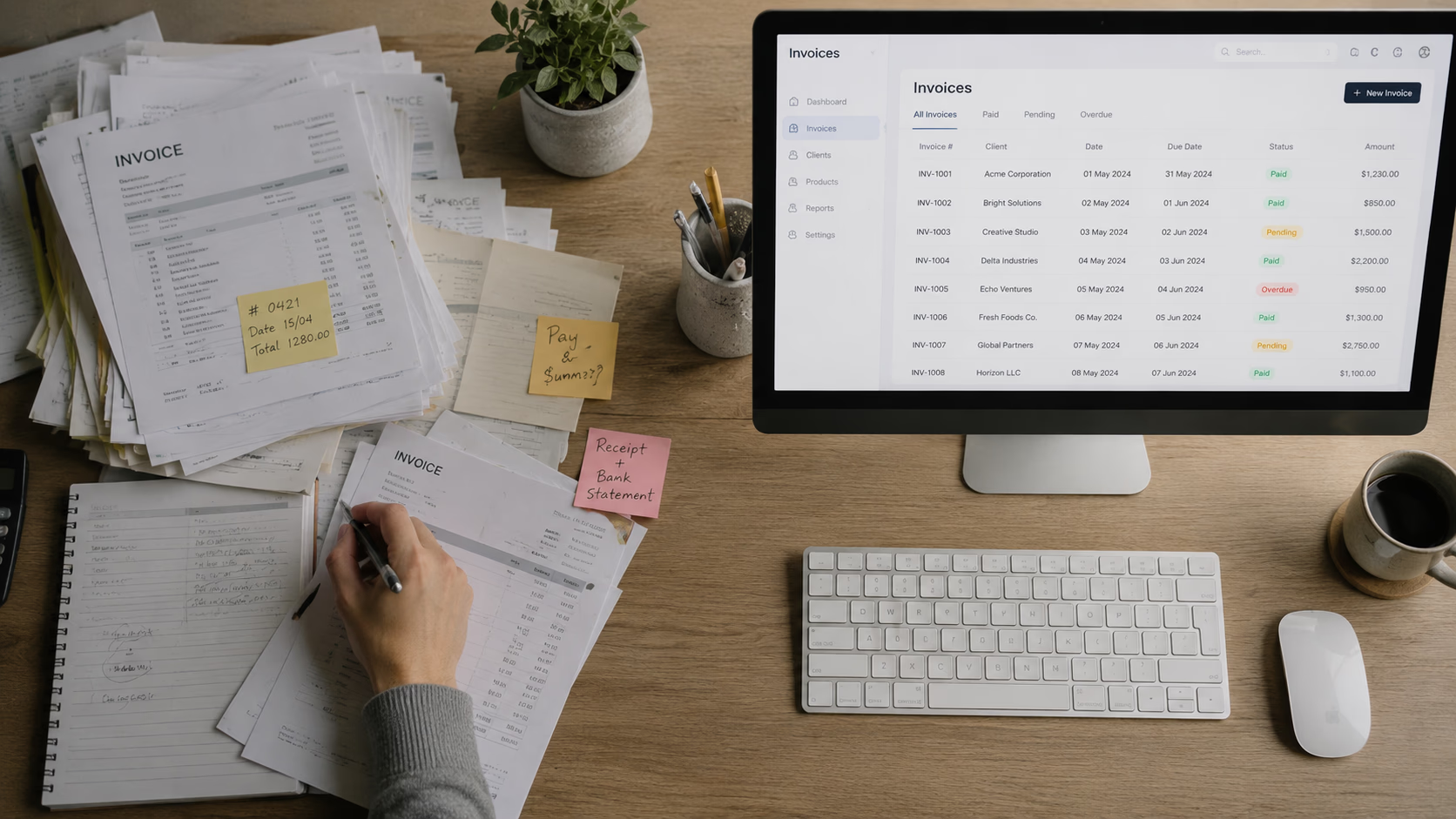
Resumen de resultados: procesamiento de órdenes de compra que tomaba un día completo (8 horas) pasó a tomar 5 minutos, con 0 cambios en el sistema existente del cliente. La solución combinó Computer Vision y LLMs para leer y cargar las órdenes automáticamente, integrándose al sistema que el equipo ya usaba. Es el tipo de proceso que la mayoría de las empresas todavía resuelve a mano: documentos que alguien lee, transcribe y valida todos los días.
Proyectos de 30 días con alcance cerrado
Los proyectos de automatización de procesos de Suris se entregan en 30 días con un compromiso definido de antemano: qué procesos, en cuánto tiempo y con qué resultado. El precio se acuerda por proyecto completo, sin facturación por hora, y el avance se mide contra el objetivo pactado en el diagnóstico.
Ficha rápida de Suris Code:
- Años de trayectoria: +18
- Proyectos entregados: +500
- Países: Argentina, Chile, Colombia, Perú, USA, UK
- Clientes: BNP Paribas Cardif, Meridional Seguros, UCA, Positivo BGH, Propato, entre otros
- Caso destacado: órdenes de compra, de 8 h a 5 min, sin cambiar el sistema existente
- Modelo: proyecto cerrado de 30 días, medido contra el objetivo acordado
- Reconocimiento: Great Place to Work
2. Globant
Lo mejor para: corporaciones con proyectos de IA a escala regional o global.
Imposible armar un ranking de IA en Argentina sin Globant. Nacida en Buenos Aires en 2003, cotiza en la Bolsa de Nueva York (NYSE: GLOB) y cerró el primer trimestre de 2026 con más de 28.500 empleados y presencia en 35 países, según sus propios reportes a la SEC. Desarrolla productos y servicios con IA para finanzas, salud, retail y entretenimiento, con clientes corporativos en Estados Unidos, Europa y Medio Oriente, y una práctica de IA que atraviesa todas sus unidades. Su escala es su fortaleza: equipos multidisciplinarios, capacidad para programas que involucran a varias áreas de una corporación a la vez, y un historial de productos digitales de alcance global. Para una PyME o una empresa mediana con un proceso puntual que automatizar, esa misma escala suele traducirse en tickets de entrada altos y tiempos de arranque más largos: es la opción correcta cuando el proyecto es un programa corporativo, y queda grande cuando es un proceso acotado.
3. Aivo
Lo mejor para: atención al cliente conversacional de alto volumen.
Aivo nació en Córdoba en 2012 y es una de las referentes regionales en IA conversacional: opera en 22 países, fue reconocida en el Cuadrante Mágico de Gartner de IA conversacional empresarial y publica casos con marcas como Visa, Banorte y Sony, además de bancos y telcos de la región. Hoy forma parte de la norteamericana Engageware, que la adquirió para sumar su plataforma a la oferta de engagement empresarial. Su producto resuelve consultas de clientes por WhatsApp, web y otros canales con volúmenes que un equipo humano no podría sostener, y su especialización en industrias reguladas (banca, seguros, telcos) es real y documentada. Si tu cuello de botella es la atención al cliente y el volumen de consultas repetidas, es la especialista de esta lista. Para procesos internos de back office (documentos, validaciones, reportes), su plataforma queda fuera de foco: está diseñada para conversar con clientes, y los procesos administrativos piden otro tipo de solución.
4. UiPath Argentina
Lo mejor para: equipos internos de automatización en grandes empresas.
UiPath es el líder global de RPA (automatización robótica de procesos): cotiza en la Bolsa de Nueva York (NYSE: PATH), aparece de forma recurrente como líder en los cuadrantes de Gartner para RPA y opera en Argentina a través de partners y oficinas regionales. Su modelo: licencias por suscripción para que un equipo interno construya y mantenga sus propios bots, una propuesta que en los últimos años amplió hacia “automatización agéntica”, con agentes de IA que se suman a los robots tradicionales. Los precios de sus licencias están publicados y arrancan en torno a los USD 300-400 mensuales según el plan. Funciona muy bien cuando la empresa ya tiene un área de automatización o IT con capacidad de desarrollo propia, gobierno de procesos y volumen para amortizar la plataforma. Sin ese equipo interno, la licencia es solo el principio: alguien tiene que diseñar, construir y mantener cada bot, y ese costo suele superar al de la herramienta.
5. InvGate
Lo mejor para: áreas de IT que quieren IA en la gestión de servicios.
InvGate es una empresa argentina fundada en Buenos Aires en 2009, con clientes en más de 75 países, entre ellos la NASA, el Ejército de Estados Unidos, Toyota y KPMG, y una ronda de crecimiento de USD 35 millones liderada por Riverwood Capital en 2023. Su software de gestión de servicios e infraestructura IT integró IA para clasificar tickets, sugerir respuestas y automatizar flujos de la mesa de ayuda, con una calificación de 4,9/5 en Gartner Peer Insights 2025 según su propia comunicación. Si el dolor está en cómo tu área de IT gestiona pedidos e incidentes, es la herramienta específica, con la ventaja de ser un producto argentino que compite de igual a igual con gigantes internacionales del ITSM. Su terreno es ese: para automatizar procesos de negocio fuera de IT (administración, operaciones, compras), hace falta otro tipo de partner que diseñe la solución alrededor del proceso.
6. NeuralSoft
Lo mejor para: PyMEs que quieren IA dentro de su sistema de gestión.
NeuralSoft es una de las empresas de software de gestión más establecidas del país: fundada en Rosario en 1989, suma más de 700 clientes, un equipo de más de 270 profesionales y oficinas en Buenos Aires, Rosario y Córdoba. Su ERP Presea concentra más de 3.700 funcionalidades, y la empresa fue pionera en ofrecer ERP en la nube en Argentina (lo hace desde 2000). En los últimos años viene integrando IA a su suite para sumar análisis y automatización dentro del sistema de gestión. Para una PyME que ya usa (o evalúa usar) su ERP, sumar las capacidades de IA del mismo proveedor es el camino más corto: un solo contrato, una sola integración, un solo soporte. La contracara es el perímetro: la IA llega hasta donde llega el ERP. Procesos que viven fuera del sistema de gestión (documentos de terceros, flujos con otros sistemas, atención de consultas) necesitan desarrollo aparte.
7. Wodes
Lo mejor para: automatización de marketing y ventas en PyMEs digitales.
Wodes es una agencia boutique argentina especializada en n8n que conecta automatización con resultados comerciales: recuperación de carritos abandonados, calificación de leads, flujos de marketing y ventas integrados con el CRM. Publica métricas propias de sus casos (como +215% en conversión de leads, según sus propios reportes), algo que pocas agencias chicas del segmento hacen, y se presenta como pionera en n8n en el país, con proyectos publicados desde USD 1.200. Su propuesta declarada va más allá del flujo suelto: arma ecosistemas de automatización conectados con marketing, ventas y operaciones del negocio. Su cancha es el embudo comercial de negocios digitales, y ahí la especialización es genuina. Para automatizar operaciones administrativas, procesos con documentos o flujos que tocan sistemas corporativos, el perfil es otro: el stack no-code y el foco comercial quedan cortos frente a procesos que piden integraciones profundas y criterio de negocio.
8. Duotach
Lo mejor para: primeras automatizaciones no-code en empresas chicas.
Duotach es una boutique argentina enfocada en PyMEs que combina N8N, herramientas no-code/low-code y desarrollo liviano, con precios publicados desde USD 1.500 por proyecto y retainers de soporte desde USD 800 mensuales. Dos cosas juegan a su favor: la transparencia de precios (publica sus rangos, algo poco común en el rubro) y el acceso directo a sus fundadores durante el proyecto, sin capas comerciales en el medio. Se presenta con la promesa de proyectos que se pagan solos en menos de seis meses, apuntando a flujos de alto impacto y baja complejidad: integraciones entre herramientas, notificaciones, reportes automáticos. Para una empresa chica que quiere probar su primera automatización sin una inversión grande, es una puerta de entrada razonable. El límite aparece cuando el proceso exige integraciones profundas con sistemas corporativos o decisiones automatizadas con criterio: ahí el no-code se queda corto y el proyecto pide ingeniería.
Factores críticos para elegir una empresa de automatización con IA en 2026
Antes de contratar un proveedor de automatización con IA, exigí estas cinco cosas:
- Evidencia con métrica. Un caso real con números verificables (horas ahorradas, errores eliminados) vale más que cualquier promesa. Si el proveedor no puede mostrar uno, estás financiando su aprendizaje.
- Diagnóstico previo del proceso. Desconfiá de quien cotiza sin haber entendido cómo funciona tu operación hoy. El error más caro es automatizar el proceso equivocado.
- Que construya sobre lo que ya tenés. Cambiar el sistema central para poder automatizar invierte la carga: la automatización debería adaptarse a tu operación.
- Propiedad de lo construido. Flujos, integraciones y documentación quedan a tu nombre. Sin eso, cambiar de proveedor cuesta lo mismo que arrancar de cero.
- Compromisos por escrito. Plazos, entregables y resultados en el contrato. Lo escrito separa a quien confía en su método de quien factura horas.
Cuánto cuesta automatizar procesos con IA en Argentina: rangos de inversión 2026
Los rangos de mercado relevados en junio de 2026, según los precios publicados por los propios proveedores y rankings del sector:
- Boutique no-code: USD 800 a 1.500+ por proyecto inicial; retainers desde USD 800/mes. Incluye flujos en n8n/low-code y soporte liviano.
- Plataformas con licencia (RPA, conversacional): desde ~USD 300-400/mes por licencias, más el costo de implementación. Incluye la herramienta; el desarrollo corre por tu equipo o un partner.
- Empresa especializada con proyecto cerrado: intermedio entre boutique y enterprise; se define con un diagnóstico previo del proceso. Incluye diagnóstico, desarrollo, integraciones y soporte post salida a producción.
- Corporación enterprise: proyectos desde USD 20.000, según rankings del sector. Incluye equipos multidisciplinarios y programas de varias áreas.
Dos lecturas de estos rangos. La primera: el precio bajo de entrada de las boutiques aplica a flujos simples; cuando el proceso toca sistemas corporativos, documentos o decisiones, el costo real está en el diseño y las integraciones. La segunda: el modelo de proyecto cerrado (como el de Suris Code, con diagnóstico previo y entrega en 30 días) reduce el riesgo más caro de todos, que es pagar por horas sin un resultado acordado.
Por qué elegir bien importa más que elegir rápido
El AI Performance Study 2026 de PwC relevó 1.217 empresas y encontró que el 20% de ellas captura el 74% de los retornos generados por IA. La adopción masiva no se tradujo en resultados masivos: según la encuesta nacional de adopción de IA en PyMEs (402 empresas), el 41,6% ya usa alguna tecnología de IA, pero la mayoría está en estadios tempranos y pocas miden el impacto.
La diferencia entre el 20% que captura valor y el resto está en la secuencia de trabajo: diagnóstico del proceso, elección del proceso correcto, métrica de resultado. El proveedor que elijas debería poder mostrarte esa secuencia en sus propios casos, con números propios y verificables.
Cuál elegir según tu caso
- Tenés procesos manuales que frenan la operación (documentos, validaciones, reportes, cargas repetitivas) → Suris Code: diagnóstico previo, proyectos acotados de 30 días y casos con métrica como el de 8 horas a 5 minutos.
- Sos una corporación con un programa de IA regional → Globant.
- Tu cuello de botella es la atención al cliente de alto volumen → Aivo.
- Tenés equipo interno de automatización y querés la herramienta → UiPath.
- El dolor está en la gestión de servicios IT → InvGate.
- Querés IA dentro del ERP que ya usás → NeuralSoft.
- Buscás automatizar marketing y ventas en un negocio digital → Wodes.
- Querés probar una primera automatización chica y barata → Duotach.
Frequently asked questions
¿Cuánto tarda implementar una automatización con IA en una empresa?
Depende del proceso: un flujo simple en herramientas no-code puede estar en una o dos semanas, y los programas corporativos llevan meses. Para procesos operativos acotados (documentos, validaciones, reportes), el estándar de mercado razonable es de 30 a 60 días. Suris Code, por ejemplo, entrega proyectos de automatización acotados en 30 días, con el contenido del proyecto definido de antemano en el diagnóstico.
¿Hay que cambiar los sistemas actuales para automatizar con IA?
En la mayoría de los casos, no. Las automatizaciones bien diseñadas se integran con los sistemas existentes mediante conexiones y lectura automática de datos. El caso de las órdenes de compra de Suris Code (de 8 horas a 5 minutos) se implementó con 0 cambios en el sistema del cliente.
¿Qué conviene: agentes de IA, RPA o automatización tradicional?
RPA conviene para tareas repetitivas con reglas fijas en sistemas que no cambian. Los agentes de IA convienen cuando la tarea exige leer contexto y decidir con criterio (clasificar documentos variados, responder consultas, validar excepciones). La automatización tradicional (integraciones, scripts) sigue siendo la mejor opción para mover datos entre sistemas sin decisión de por medio. Un buen diagnóstico suele combinar las tres.
¿Cuánto cuesta automatizar un proceso con IA en Argentina?
Los rangos de mercado de 2026 van desde USD 800-1.500 por proyectos chicos en boutiques no-code, licencias de plataforma desde ~USD 300-400 mensuales, hasta proyectos enterprise desde USD 20.000. Las empresas especializadas con proyecto cerrado se ubican en el rango intermedio y definen el precio con un diagnóstico previo del proceso.
Written by
Pablo Mazzucco
Chief Engineering & Delivery Officer
Pablo Mazzucco es Chief Engineering & Delivery Officer de Suris Code y uno de los pilares fundadores de la empresa, el motor detrás de su columna técnica y operativa. Con más de 15 años de experiencia en desarrollo de software, arquitectura de sistemas y gestión de entregas, lidera los equipos de ingeniería sin perder el compromiso hands-on con la calidad, la escalabilidad y los resultados del cliente. Su rol dual —al frente tanto de la ingeniería como de la ejecución de proyectos— garantiza que cada solución de Suris Code se construya sobre bases sólidas y se entregue con precisión.