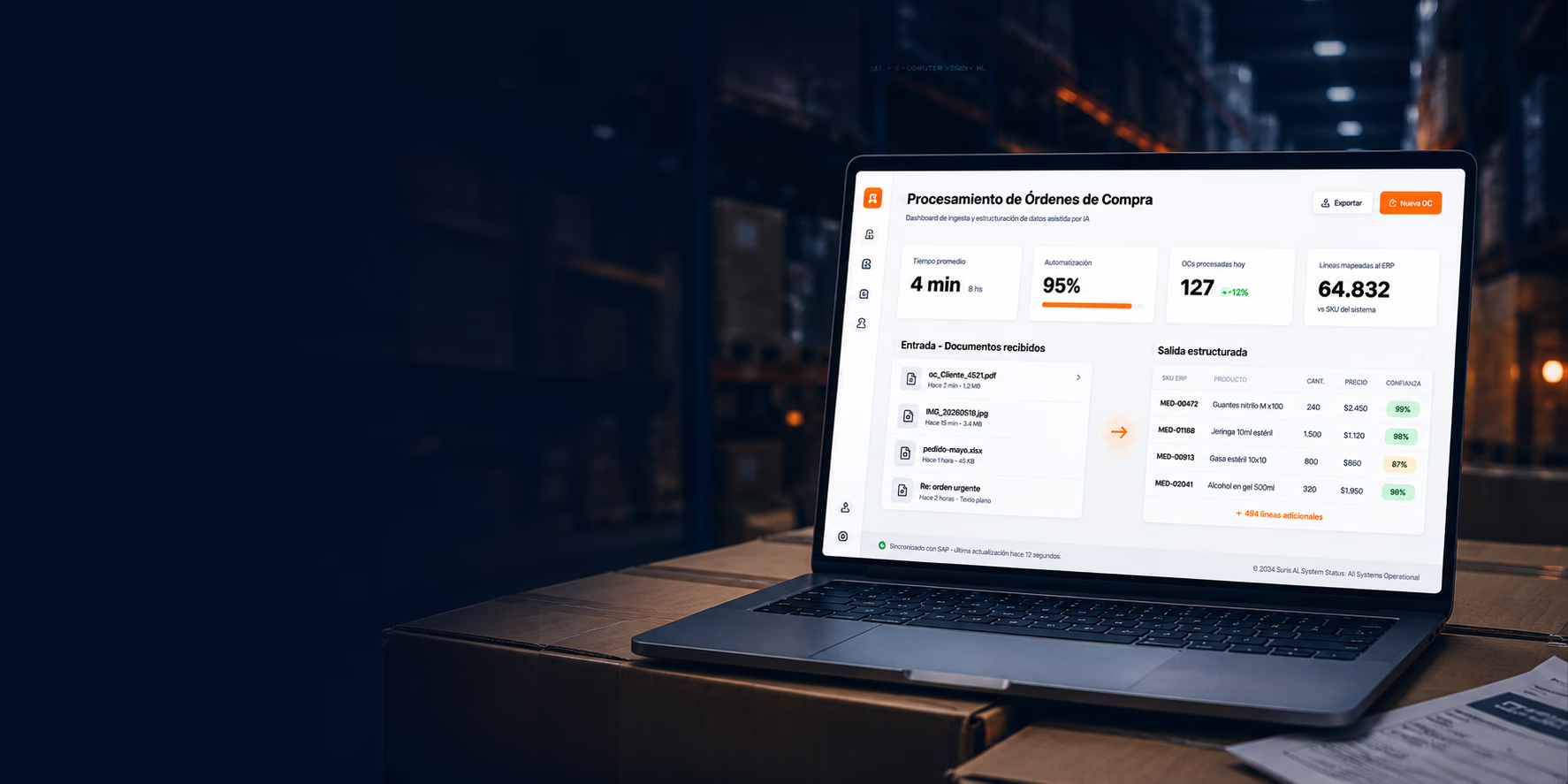
From a day to minutes: automatic order processing
We reduced manual processing from one day to just minutes, using AI based on computer vision and machine learning.
Orders with no human intervention
Lines per PO processed automatically
Context
A healthcare distributor with a high volume of B2B orders, each one with more than 500 lines. Orders arrive through mixed channels: images, photos of printed documents, free-format Excel sheets and email bodies. The data entry team worked against the ERP line by line.
The problem
Every order took hours of manual work and, at demand peaks, response time started to affect the commercial operation. Scaling sales meant scaling back-office work in almost the same proportion.
What we did
We built an Intelligent Document Processing system for B2B orders: it ingests orders in any format (image, PDF, photo, unstructured Excel, email body), runs them through a vision model to extract the order lines, maps them against the ERP SKUs with a model trained on the client’s own catalog, and loads the high-confidence lines straight into the ERP. Low-confidence lines go into a human review queue.
- Computer vision to read heterogeneous inputs. The end client was not going to change how they send orders — the solution adapts to the existing formats.
- An ML model trained on the client’s history for SKU mapping. Every product is described in a thousand ways depending on the buyer; the model learns from the catalog and from real history.
- A human review queue for low-confidence lines. The operator stops entering data and moves on to validating exceptions, with a confidence score per line.
- Direct ERP integration, with no intermediate layer. Mapped orders enter the system with the SKUs already resolved.
What we ruled out
Building a structured entry portal so that B2B clients would send orders in a uniform format. It would have solved the problem “at the source”, but buyers in the sector had spent years sending orders the way they always had: forcing a change of habit would have added more commercial friction than the technical saving was worth. It is documented as optional for phase 2.
Why it worked
- The client did not have to change how they work.
- The AI learned on real data, not on theoretical catalogs.
- People stopped entering data and moved on to managing exceptions.
- 95% was automated; the goal was never 100%.
Stack
- .NET
- React
- Azure DevOps
- Computer Vision
- Machine Learning
- ERP integration
Outcome
- 95% of orders processed with no human intervention
- From a day per order to minutes
- +500 lines processed automatically per PO
- Growth absorbed without adding headcount
- The operational bottleneck removed